On January 4, 2022, the Cour de cassation confirmed the rulings of the president of the Court of Appeals validating dawn raids carried out in May 2017 by the French Competition Authority (“FCA”) in the rendering sector.[1]


On January 4, 2022, the Cour de cassation confirmed the rulings of the president of the Court of Appeals validating dawn raids carried out in May 2017 by the French Competition Authority (“FCA”) in the rendering sector.[1]

On December 28, 2021, the French Competition Authority (“FCA”) dismissed a claim brought against Samsung by one of its authorized distributors regarding alleged anticompetitive agreements in the sale of consumer electronics.[1]

On December 28, 2021 and January 21, 2022, the German Federal Cartel Office (“FCO”) imposed fines totaling €7.3 million on Maurer SE (“Maurer”) and Mageba GmbH, Göttingen (“Mageba”) for bid rigging and market allocation.[1]

On December 22, 2021, the German Federal Cartel Office (“FCO”) published its annual review for 2021.[1] As done already on the occasion of the presentation of its Annual Report 2020/2021,[2] the FCO’s President, Andreas Mundt, emphasized again that the protection of competition in the digital economy remains one of the FCO’s top priorities. He underlined that also merger control will continue to serve as a key tool to achieve this goal. In addition, he pointed out that the FCO would welcome powers of intervention also with regard to infringements of consumer rights.
The UK Government has stated that the review of mergers in the UK “should be as efficient as possible, focusing its attention on mergers most likely to be harmful to competition and consumers, without unduly hindering benign investment.”[1] To that end, the UK has a voluntary, non-suspensive system of merger control, intended to promote greater flexibility and proportionality than a suspensory regime.
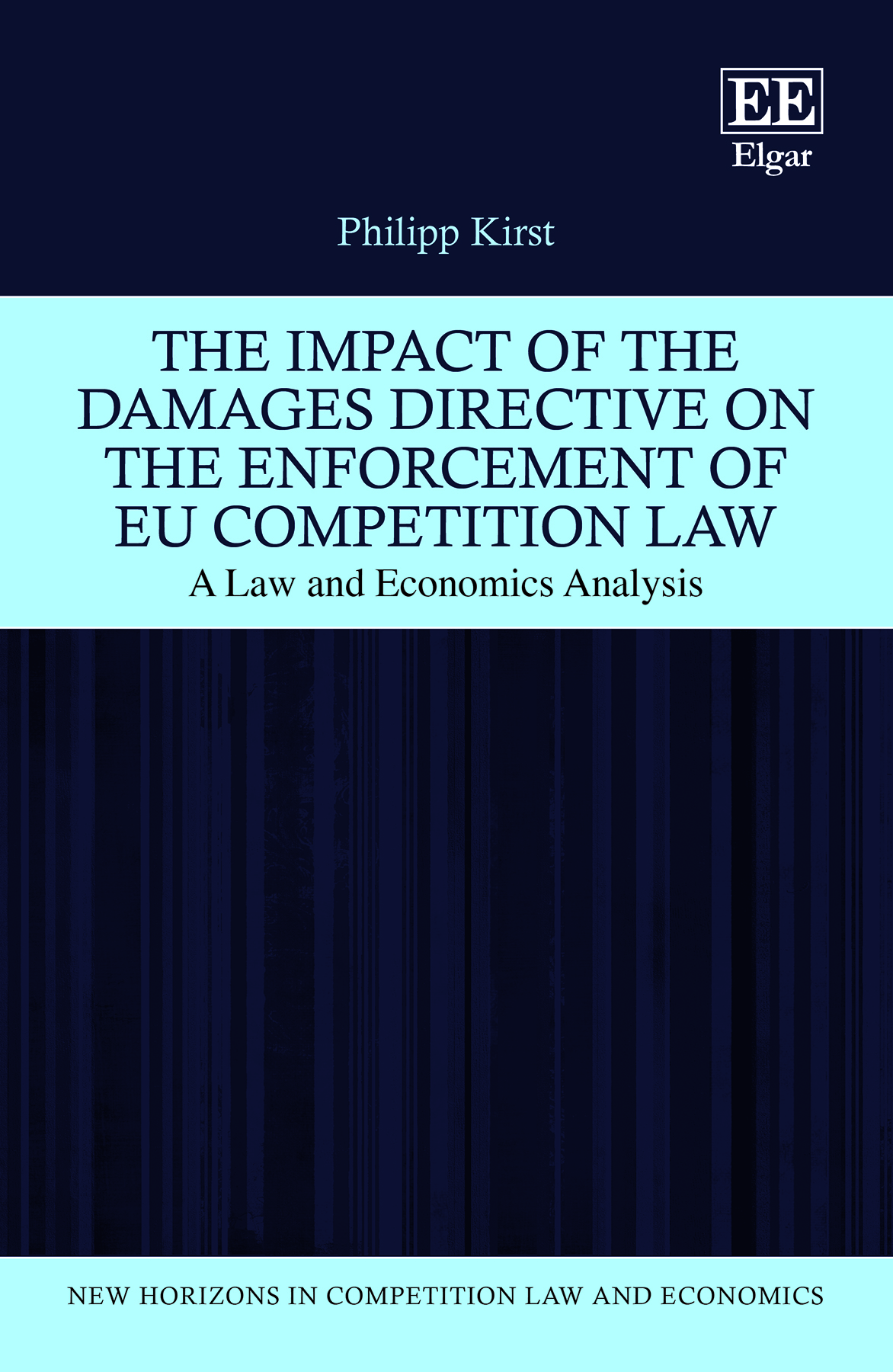
Cleary Gottlieb associate Philipp Kirst authored the book, The Impact of the Damages Directive on the Enforcement of EU Competition Law, which was published in the New Horizons in Competition Law and Economics series by Edward Elgar Publishing.
On 16 December 2021, the CAT published a notice of application brought by Mr. Justin Gutmann to commence collective proceedings
On December 16, 2021, the European Commission officially ‘took note’ of IAG and Globalia’s announcement to terminate their proposed agreement according to which IAG would acquire sole control over Air Europa.[1]

In a press release dated December 15, 2021, the French Competition Authority (the “FCA”) announced the opening of a public consultation on Google’s proposed commitments in the “related rights” case. These commitments seek to address the preliminary competition concerns expressed by the FCA Investigation Services, who are still pursuing the proceedings on the merits following an interim measures decision issued in April 2020.